


CASE STUDY
2023Automatic in-line continuous feed powder plant
Customer
CO.AR.ME. S.R.L., LEINI’ (TO)
Objective
Replace obsolete system parts while maintaining the existing powder coating booth to optimize the entire production process, improving quality, efficiency, and energy savings.
Challenges
- Modernize the system to meet new quality standards
- Ensure efficiency and versatility in processing parts of various sizes and colors
- Reduce installation times
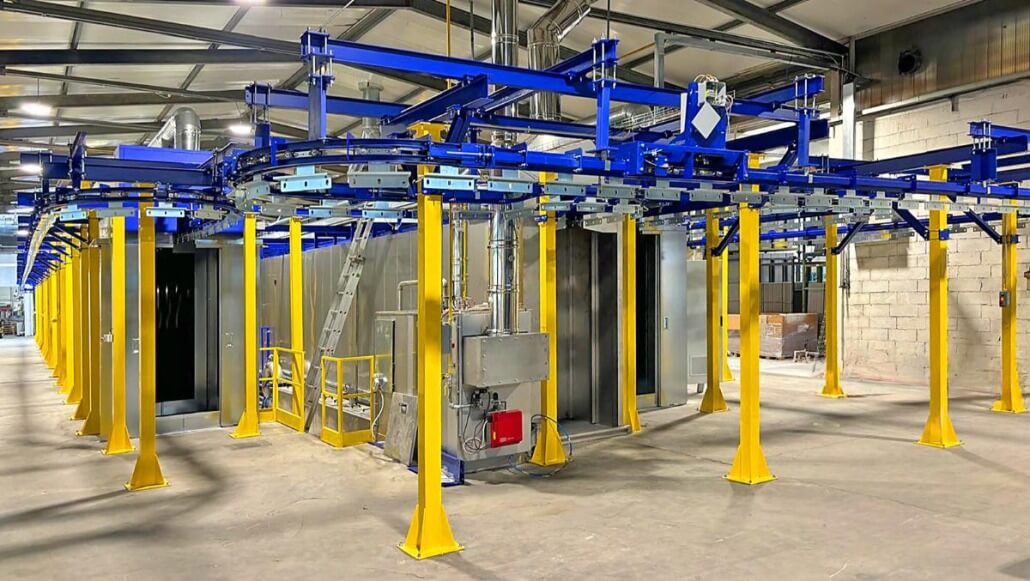
Impact
Functional pretreatment
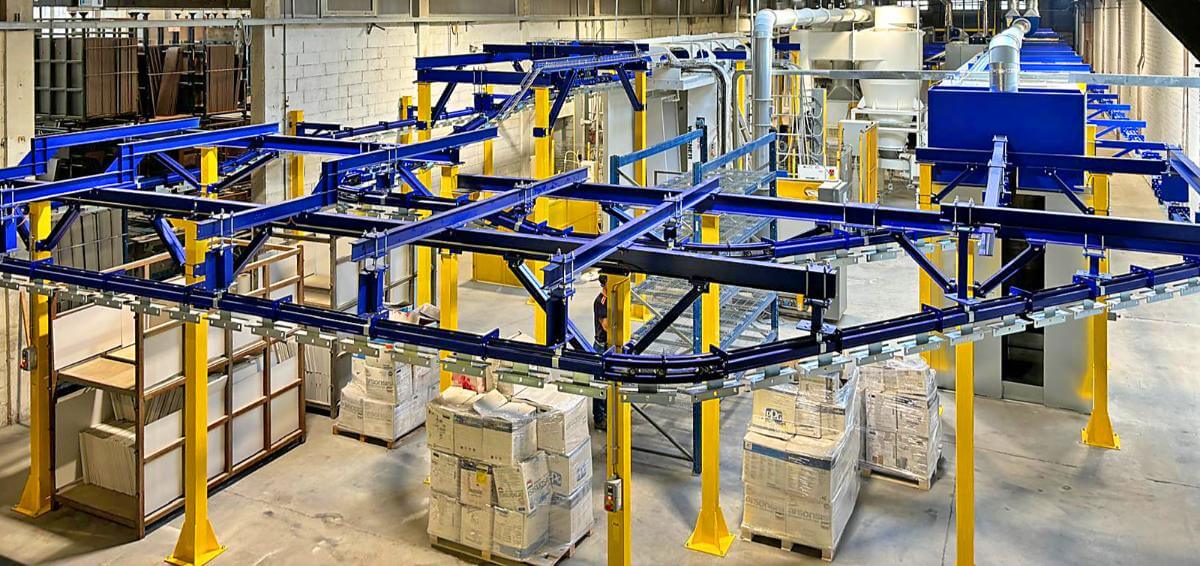
Before being painted, pieces go through a three-stage pretreatment tunnel, which is essential to ensure that surfaces are perfectly clean and free of impurities. The hot degreasing process removes dirt, oils and residue, ensuring better paint adhesion and greater durability of the coating, which is essential for furniture accessories intended for DIY use.
Optimized temperatures
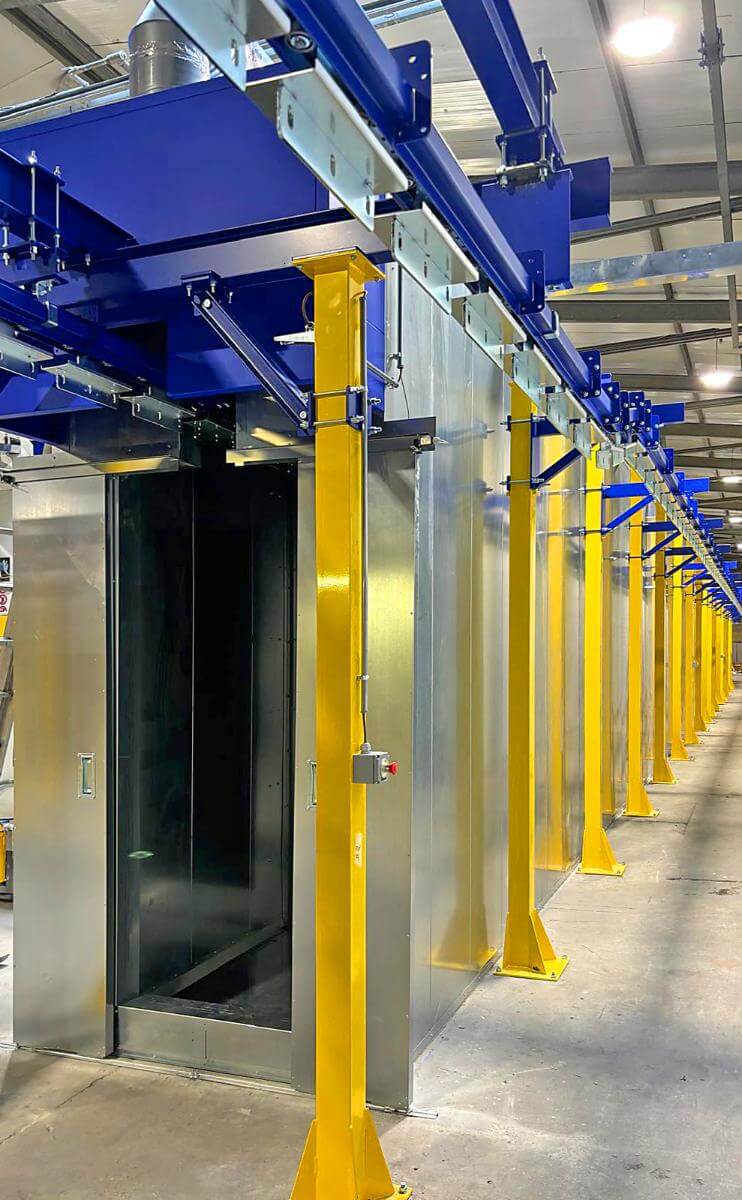
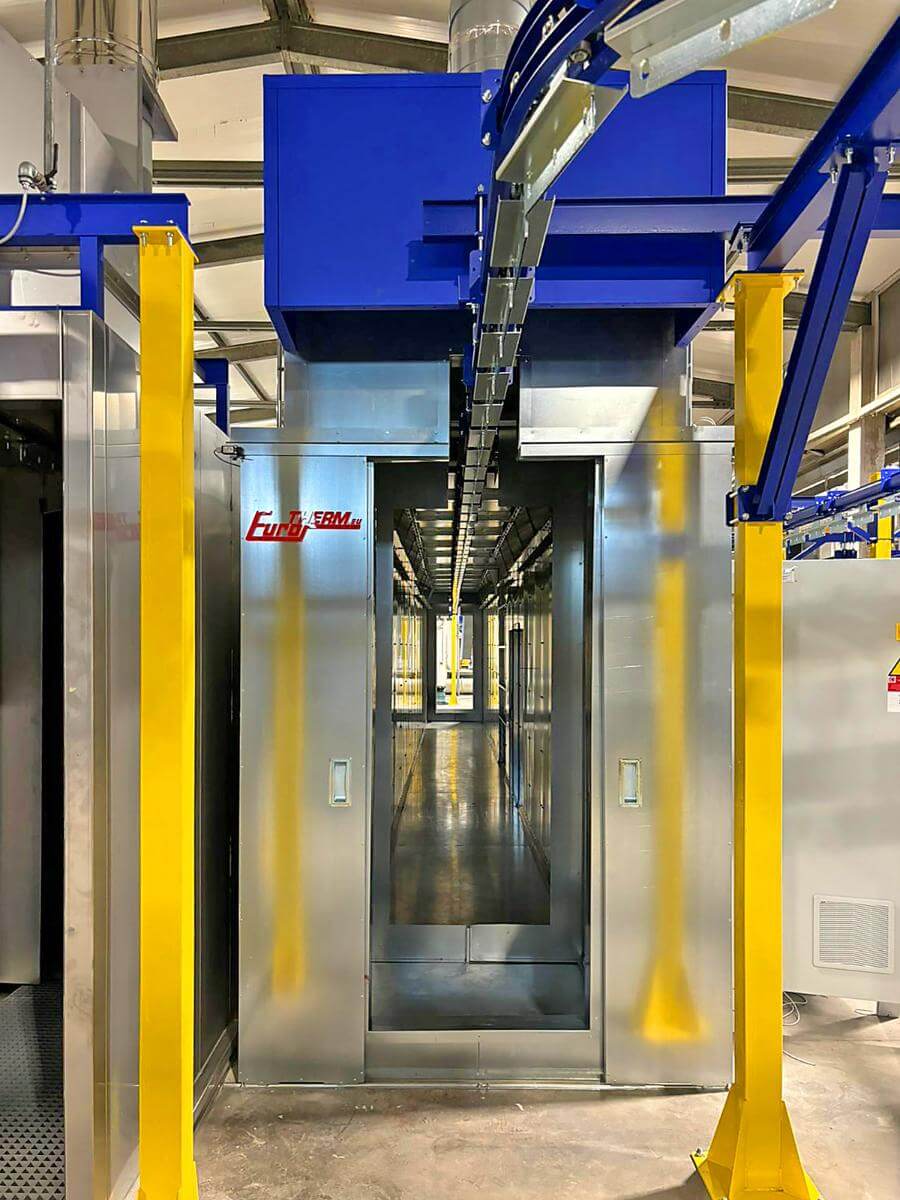
After pretreatment and before being transported inside the spray booth, the parts pass into the in-line drying oven at 120°C to remove all traces of moisture. Following automatic powder coating, the parts pass inside the in-line curing oven, which operates at a temperature of 180°C.
The optimization of part inlet and outlet temperatures from the furnaces together with modern heat recovery systems is the basis for reducing energy consumption and improving the production yield of the plant.
Ergonomic operations
The manual loading and unloading system with integrated ascent and descent system is specifically designed to handle products of different sizes, improve work ergonomics and facilitate personnel operations, reducing physical effort and improving the efficiency of manual operations. After being loaded, the monorail overhead transfer machine automatically transports the parts along the various stages of the painting process, ensuring a continuous and highly efficient production flow.
Plus
In keeping with the requirement expressed by the Client, the existing automatic powder coating booth was restored and integrated into the plant, which was designed to occupy as little space as possible, thus providing significant savings on time and cost.
One of the greatest difficulties has been to completing the work during the summer production shutdown, with the need to dismantle the old plant and integrate the new equipment with reduced timelines. Despite the complexity, the challenge was successfully overcome. The plant is now capable of paint up to 250 cabinets per single shift, providing a significant increase in productivity compared to the past.