


Learning center
2026Defects in Liquid Coating: Causes and Process Parameters to Monitor
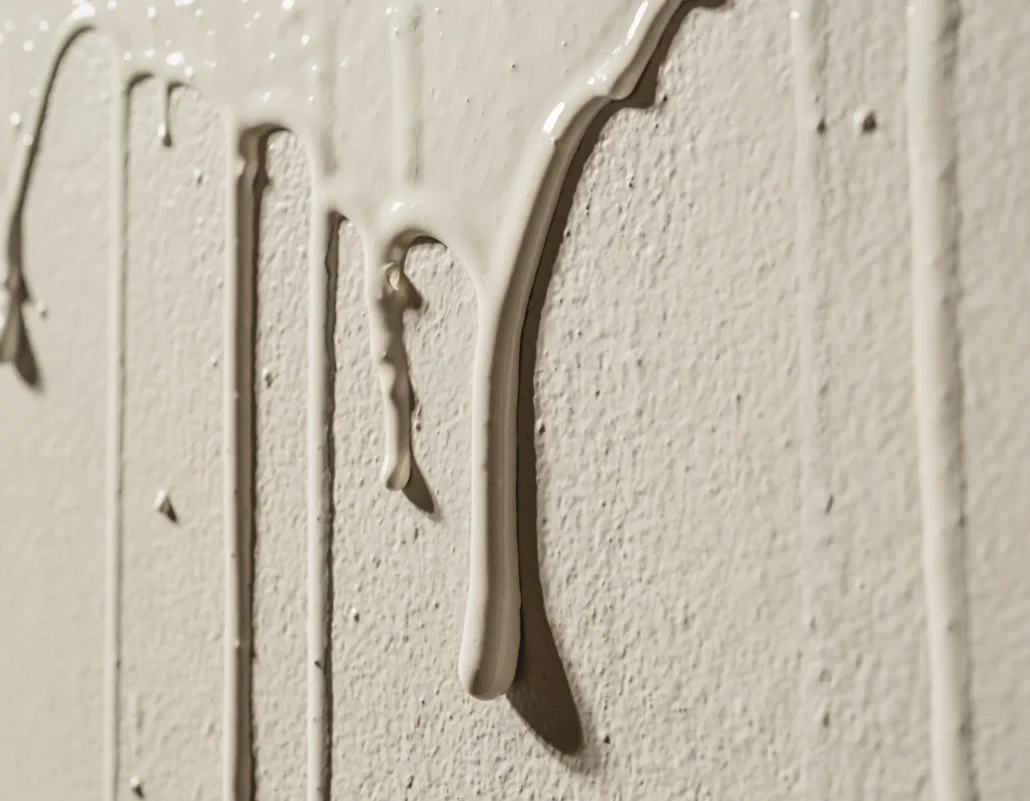
Ensuring a flawless application in industrial liquid coating is an essential technical requirement, upon which the corrosion resistance, the substrate’s durability, and the finished product’s aesthetic quality directly depend. A surface defect is never random; rather, it is a visible sign of a deviation in process parameters. Understanding the root causes of coating defects allows for timely intervention throughout the entire cycle—from part preparation to control of the application environment and through the drying phase. Resolving liquid coating problems at their root is the only way to optimize line efficiency and reduce the scrap rate.
The main types of defects and their origins
Ensuring flawless finish results requires the coordinated management of three key factors: substrate preparation, the work environment, and equipment settings. Among the most common defects in liquid painting are:
- 01
Sagging: This occurs when the applied film runs before it dries or forms a film. These are generally caused by excessively low paint viscosity, an incorrect dilution ratio, an excessive amount of product applied in a single coat, or incorrect spray gun settings.
- 02
Craters and fisheye defects: These appear as circular depressions that expose the underlying layer or substrate. The main cause lies in the presence of contaminants with low surface tension on the substrate (such as oils, silicone, greases, or release agents) or in the compressed air used for atomization.
- 03
Orange peel: gives the surface a grainy, rippled appearance. This phenomenon indicates a failure or incomplete spreading of the liquid film, caused by a mixture that is too viscous, too rapid evaporation of the solvent, incorrect atomization pressure, or a suboptimal distance between the spray gun and the workpiece.
- 04
Bubbles and pinholes (popping and pinholes): These are micro-cavities or raised areas caused by solvents or air becoming trapped inside the film while the outer surface is already drying. This occurs whenflash-off times are insufficient before entering the oven, or due to an excessively high temperature gradient during the early stages of curing.
- 05
Tarnishing and blushing: These occur when the film loses its gloss or develops a milky film on its surface. This phenomenon is primarily linked to high relative humidity in the application environment or to the use of fast-evaporating solvents, which cool the surface and cause atmospheric moisture to condense on the still-wet film.
- 06
Poor adhesion and delamination: These are the most serious issues, as they cause the coating to detach from the substrate or between the different applied coats. The causes almost always lie in inadequate chemical or mechanical pretreatment, the presence of oily residues on the surface, or failure to observe the recoating intervals.
Get in touch
Raise the quality standards of your finishing line by eliminating the variables that cause imperfections. Eurotherm’s engineered systems ensure precise control of airflow, filtration, and thermo-hygrometric conditions, guaranteeing uniform, repeatable, and contamination-free coatings on every production batch.
Strategies for effective prevention
Eliminating the occurrence of imperfections requires a comprehensive approach capable of controlling and stabilizing every single phase of the production cycle. Eurotherm’s plant engineering solutions are designed specifically to eliminate operational fluctuations and ensure consistent quality standards in the finishing process. Preventive measures inevitably begin with surface pretreatment: targeted steps involving chemical degreasing, demineralized rinsing, and thorough drying create the ideal bonding base and eliminate all traces of organic contaminants or release agents.
When moving into the application area, strict microclimatic isolation of the work environment becomes a priority. Maintaining constant levels of temperature and relative humidity, combined with high-efficiency air filtration systems in the booth, helps stabilize the product’s rheology and the evaporation rate of solvents, while eliminating the risk of contaminant particles settling on the still-wet film. This is complemented by the proper calibration of spray parameters: the paint’s viscosity must be measured and adjusted according to environmental conditions, while the atomization air pressure and the spray gun’s airflow rate must be regulated to ensure uniform atomization.
Finally, the flash-off phase and the subsequent passage through the drying ovens must follow gradual temperature profiles that are perfectly distributed throughout the cavity. This control prevents surface boiling of the solvents and ensures homogeneous cross-linking without internal stresses within the polymer matrix.
Stability and operational control
Consistent coating quality can only be achieved by ensuring complete repeatability of operating conditions. Scheduling periodic maintenance on the vacuum systems and filtration units, along with constant monitoring of compressed air quality (using efficient dryers and oil separators), prevents unexpected variations in film deposition.
Equally crucial is the adoption of systematic measurement protocols: monitoring the mixture’s viscosity, measuring wet and dry film thicknesses, and tracking drying curves make it possible to detect even the slightest deviations before they lead to complaints. A reliable plant infrastructure combined with strict control of parameters is the only effective strategy for eliminating defects.
Get in touch
Don’t let application errors compromise the quality of your products. The Eurotherm technical team analyzes the critical issues in your system to identify risk factors and prevent defects in liquid coating. Contact us to pinpoint the cause of the issue and restore a consistently excellent finish.