


Learning center
2025Powder coating: what it is, how it works, benefits and applications
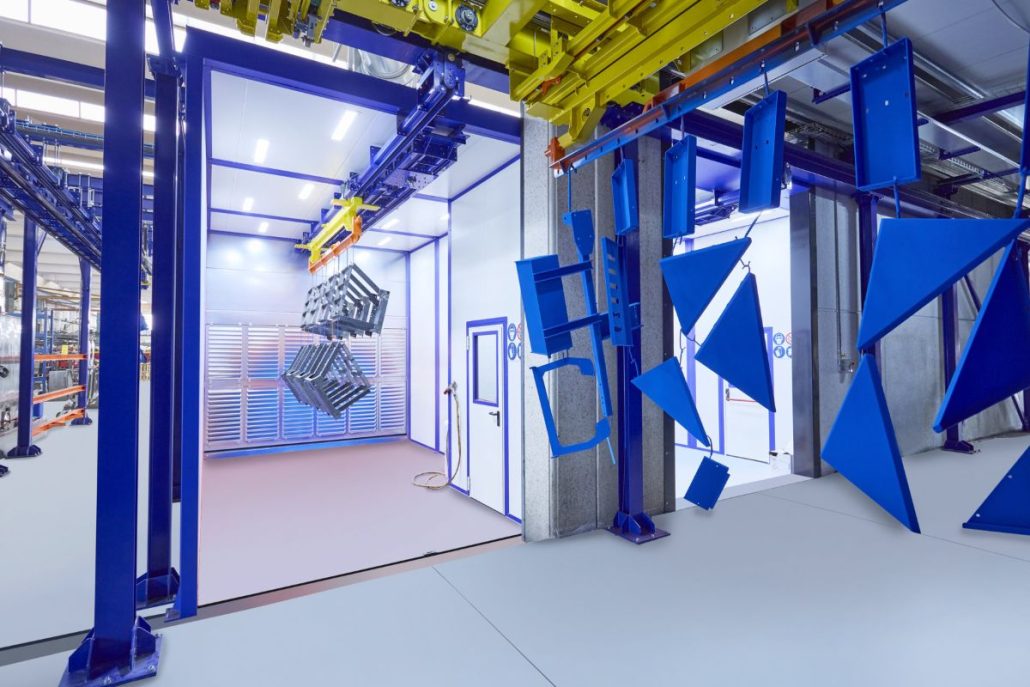
Why powder coating is a key technology for modern industry
Powder coating is an advanced coating process that uses thermosetting or thermoplastic painting powders applied electrostatically and then cured in an oven.
It is a high-performance, versatile, cross-industry technology chosen by many industries for its ability to combine aesthetic quality, mechanical strength, production efficiency, and environmental sustainability.
Thanks to its ability to precisely treat materials and components of varying complexity, powder coating finds application in sectors such as metal furniture, window and door frames, ACE, heavy carpentry, Energy and Oil&Gas. In the most demanding industrial applications, the most popular technologies include epoxy powder coating, which is particularly appreciated for its high chemical and anticorrosive resistance.
The basic steps of industrial powder coating
Powder coating, in its complete production cycle, involves three stages: pretreatment, application, and curing, each essential to achieve a homogeneous, durable coating that meets the quality standards required by modern manufacturing.
Surface preparation or surface pretreatment
It consists of removing contaminants, oxides and residues by phosphating or sandblasting. This step is crucial to ensure adhesion and durability of the coating.
Application of painting powder
It takes place through manual electrostatic guns or through the automatic systems integrated in spray booths. Transfer efficiency and easy recovery of excess powder are key factors in optimizing the performance of the powder coating process and guide the choice of the most suitable system.
Polymerization in the oven
Baking in static ovens transforms the powder into a continuous, strong and durable film. Temperatures and timing vary depending on the material and type of coating, such as in epoxy powder coating used for high anticorrosive performance.
Then there are different application technologies, which vary according to production needs:
- Manual plants for small series or craft production.
- Automated high-volume lines with continuous part handling.
- Custom solutions for critical production and subject to specific standards, materials or special industries.
Get in touch
Eurotherm takes a consultative approach to the design of powder coating plants, developing solutions perfectly sized to actual production needs and optimized for space constraints, ergonomics and operational safety.
Industrial painting systems and solutions for complex productions
A powder coating plant suitable for the major needs of global industries must first meet the requirement of scalability.
This means being able to adapt the coating process to different operating conditions-different materials, various part sizes, batch frequency, unexpected peaks, and specific finishing requirements-without compromising either cycle efficiency or the quality of the end result.
The feature of scalability in an industrial coating plant depends on certain technological pillars that make it possible to manage the criticalities and complexities of productions that change from one batch to the next, zeroing the margin of error.
Modular flexibility
In custom-designed modular plants, booths, ovens and handling systems can be adapted or expanded over time. This makes it possible to treat indifferently small batches of complex components or oversized items typical of heavy carpentry, while maintaining the same process reliability throughout the powder coating cycle.
Rapidity in color changes
In industries where customization is increasingly in demand, the ability to quickly manage color change enables diversified orders to be fulfilled on time. Technologies such as booths with advanced filtration systems, cyclones for recovery, and PLC-automated management systems reduce downtime and optimize productivity on variable batches, ensuring efficient paint powder management even in multi-job settings.
Digitization and integrated control
Where consistency of result is critical, parameters such as temperature, humidity, energy consumption and film thickness must be monitored and adjusted in real time. This ensures process repeatability and product homogeneity even in widely varying productions. Plant digitization-that is, the use of a specialized computer system to manage or control industrial processes-also makes it possible to collect useful data for predictive maintenance and consumption optimization, ensuring greater control in the entire powder coating process.
An example of how the above three principles can be integrated into the implementation in a single project is the Eurotherm installation of a semiautomatic powder coating plant capable of up to 15 color changes on a daily production of 150 pieces of outdoor furniture.
Powder coating in strategic sectors: the role of technological innovation
Now considered much more than a surface finishing technique, powder coating is a strategic asset for industries that aim to maximize the yield of production processes.
In a global market characterized by complex supply chains, increasingly stringent environmental regulations, and rising expectations for aesthetic and functional product performance, the choice of paint system can make the difference between simple compliance and true competitive advantage.
From small manufacturers to large multinationals, more and more companies are internalizing their coating processes, not only to reduce the costs of external supplies but above all to have greater production flexibility and control over the quality of the end result. In fact, new-generation plants make it possible to address very different challenges that would be unthinkable to meet with standardized technologies and processes-from managing variable batches to processing parts that are out-of-gauge or have special geometries, to frequent color changes and special materials.
The benefits of a customized approach to powder coating are measured not only in terms of increased production and finished product quality, but in a combination of factors that directly touch business competitiveness, such as optimized operating costs and reduced environmental footprint.
Technological innovation in industrial coating products-energy savings, recovery and reuse of paints and other materials used in processing, energy efficiency of ovens-is then opening up further scenarios; and the evolution in design through plant automation and process digitization makes powder coating an attractive alternative to meet corporate sustainability requirements.
Sustainability of paint plants as a competitive advantage
Sustainability today, from an ancillary issue has become a strategic criterion in the selection of suppliers and industrial partners.
The energy efficiency and energy-saving systems implemented on Eurotherm baking ovens, and the systems for the recovery and reuse of materials with which Eurotherm sandblasting and powder coating booths are equipped, are designed with this in mind: to combine performance and environmental sustainability, and to support companies in innovating their processes from a responsible perspective and according to the logic of Industry 5.0.
Powder coating plants stand out in this regard thanks to solutions that combine environmental benefits with tangible economic returns.
- 01
Energy efficiency: heat recovery and air recirculation systems in the baking and drying ovens reduce consumption and improve process quality.
- 02
Electrical optimization: digital controls and automation enable precise metering of resources, avoiding waste and lowering operating costs.
- 03
Paint dust recovery: excess dust can be collected and reused; this means less waste, lower disposal costs, and a more sustainable cycle.
- 04
ESG compliance: solvent-free and VOC-free powder processes simplify regulatory management (exempt from the European VOC Directive 1999/13/EC) and improve companies’ positioning with respect to the market and international environmental parameters.
How to choose a powder coating plant: criteria and best practices
In sectors such as architecture, window frames and street furniture, powder coating is synonymous with aesthetic quality, strength and durability even in aggressive environments. The same is true for train, truck, and agricultural (ACE) components, where it is crucial to ensure the performance of functional surfaces exposed to wear and weathering.
The main variables to be taken into consideration when defining the most suitable paint system configuration are:
- size and layout: related to the type of production and growth objectives;
- Automation and digitization: determinants for quality control and ensuring ISO compliance;
- energy efficiency: decisive criteria, also to align with increasingly stringent standards;
- Sustainability: color change management and dust recovery systems directly affect.
Get in touch
Eurotherm is available to industries looking to improve their competitiveness over the long term, with an international team of consultants and engineers dedicated to custom design of industrial painting systems and solutions.