CASE STUDY
2020Manual liquid paint coating system for cable car and aerial tramway components
Customer
Poma (France)
Objective
- Build a complete industrial liquid painting system for the protection of mechanical components used in cable cars and aerial tramways.
- Integrate the steps of surface preparation, washing, and high-performance finishing into a single production cycle.
- Maximize logistics efficiency through an automated material-handling system capable of handling heavy loads.
Challenges
- Ensure that the coatings are extremely resistant to weathering and the mechanical stresses typical of mountain environments.
- Optimize processing times between the various processing stations for large components with complex geometries.

Impact
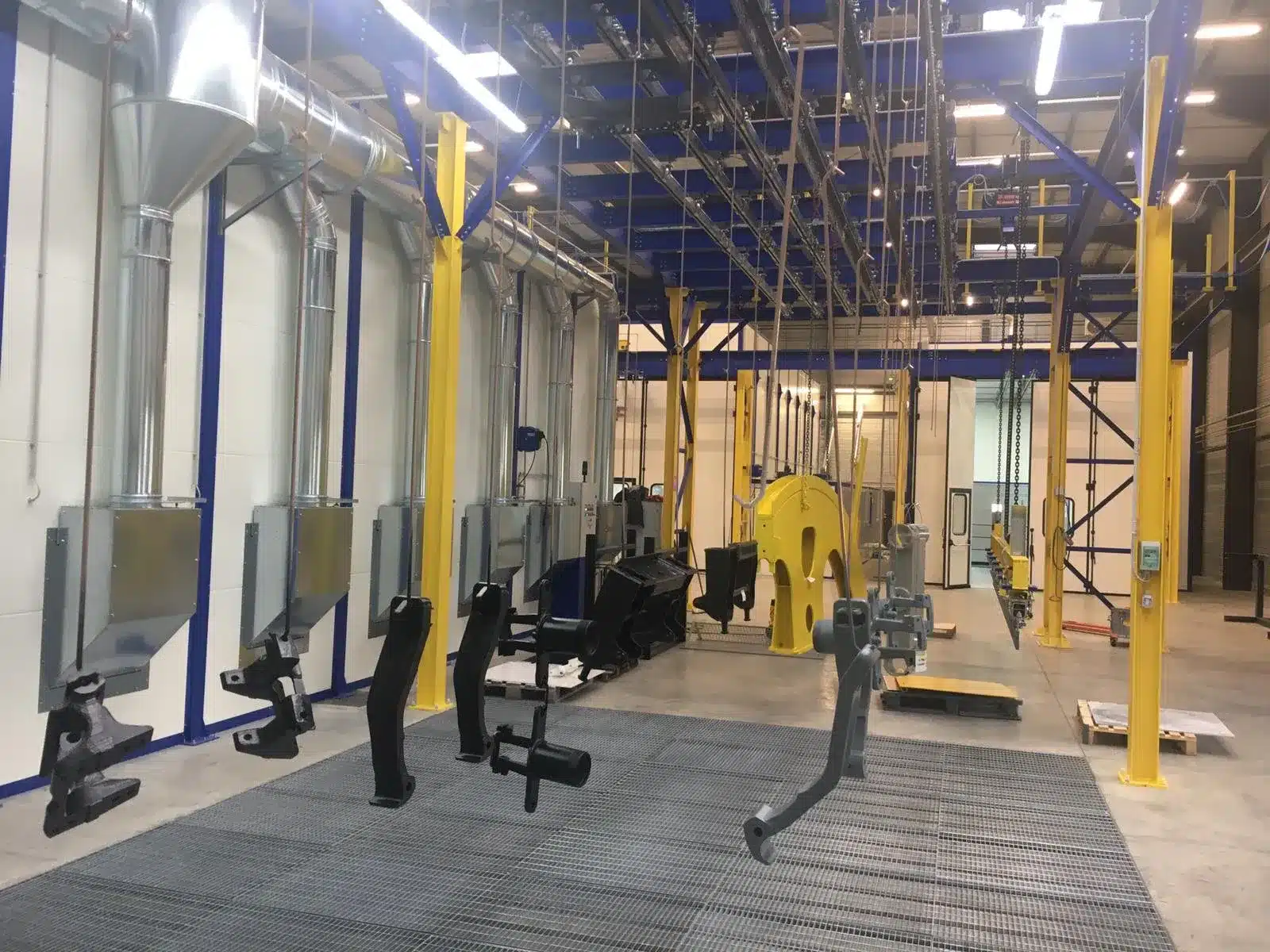
The system installed for Poma addresses the need to protect critical components exposed to harsh weather conditions, ensuring perfect paint adhesion and a flawless finish. The synergy between the treatment stations and the handling system has transformed the painting process into a smooth and controlled flow, reducing operational risks and increasing productivity.
The implemented solutions are distinguished by:
- Superior structural reliability thanks to a rigorous surface preparation process.
- Process sustainability through abrasive and liquid recovery systems that reduce environmental impact.
- Ergonomics and operational precision are ensured by workstations designed with technicians’ needs in mind.
Sandblasting booth with full grit recovery
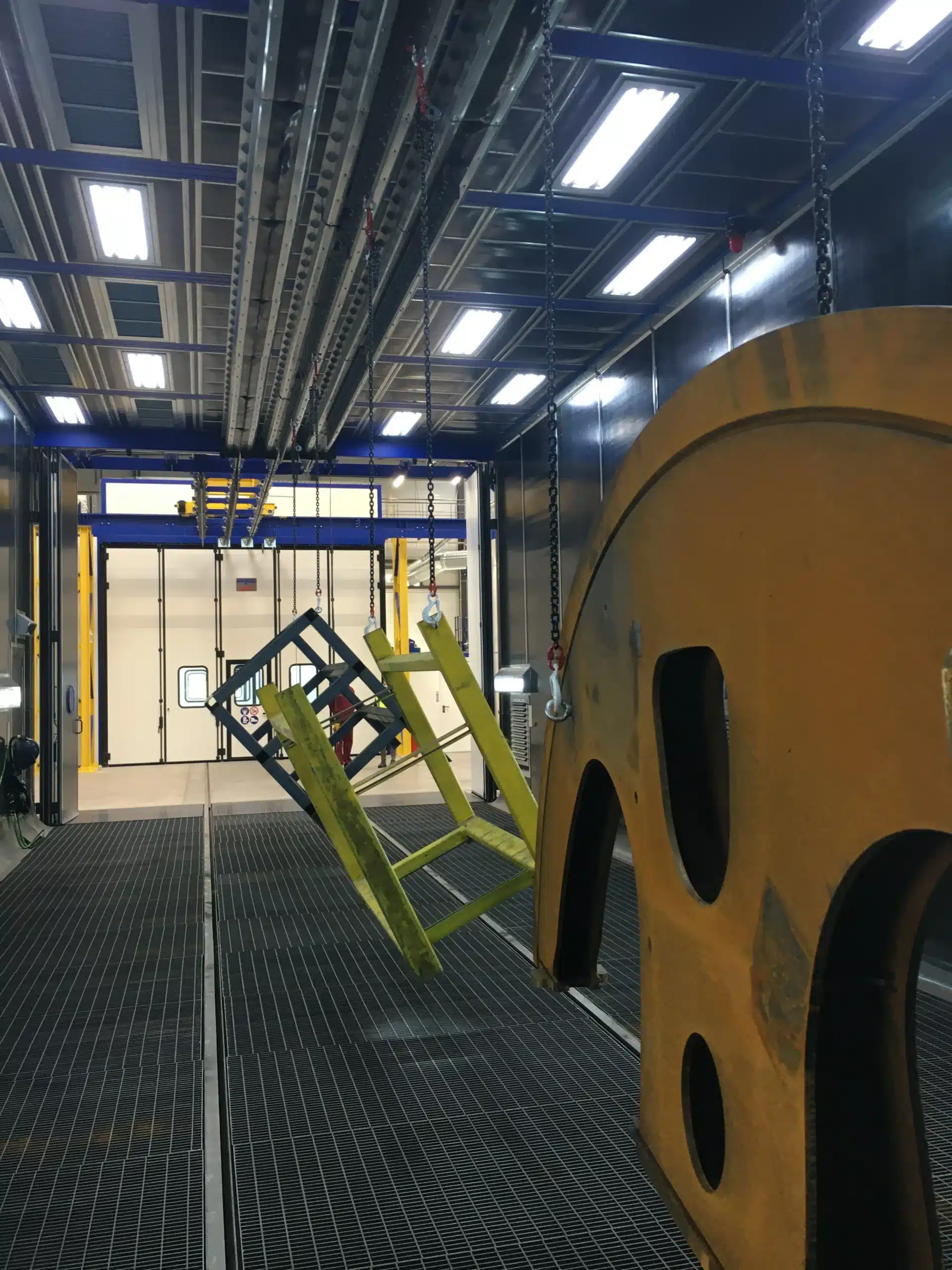
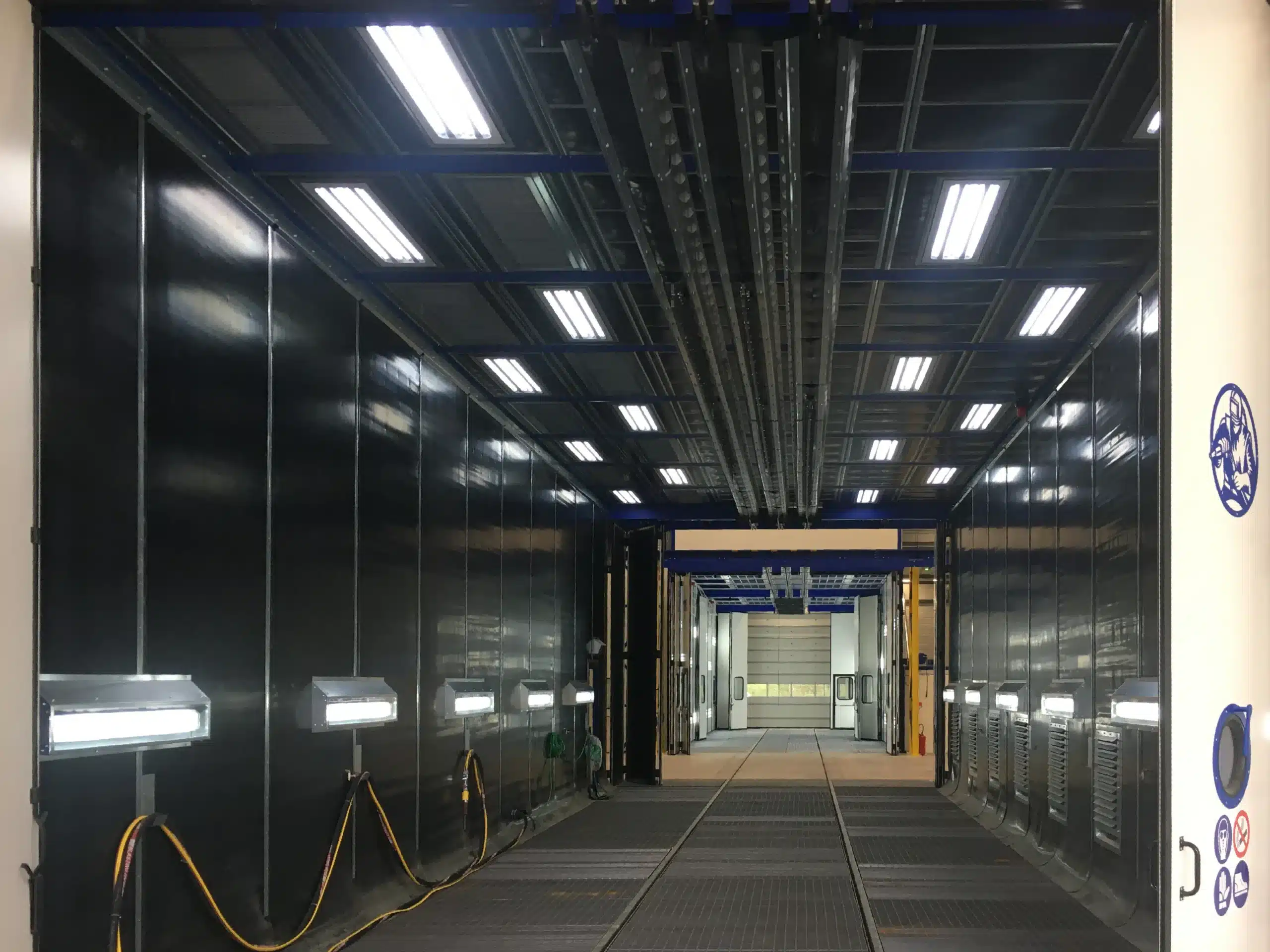
The first stage of the treatment takes place in a high-efficiency sandblasting booth, which is essential for preparing the metal surfaces of the components before painting. The system is equipped with a total abrasive recovery system located beneath the work surface, which automatically collects, filters, and regenerates the abrasive for subsequent cycles. This configuration ensures a consistently clean work environment and drastically reduces material waste, while guaranteeing a uniform surface roughness that is optimal for the adhesion of protective coatings.
Washing booth with built-in drying function
To ensure the complete absence of contaminants, the products pass through a professional washing chamber designed for high-pressure operations. What sets this solution apart is the integration of a drying function immediately following the washing phase, which quickly removes residual moisture from the surfaces and cavities of the parts. The system prevents immediate oxidation and prepares the components for the subsequent painting phase, optimizing turnaround times between the various booths.
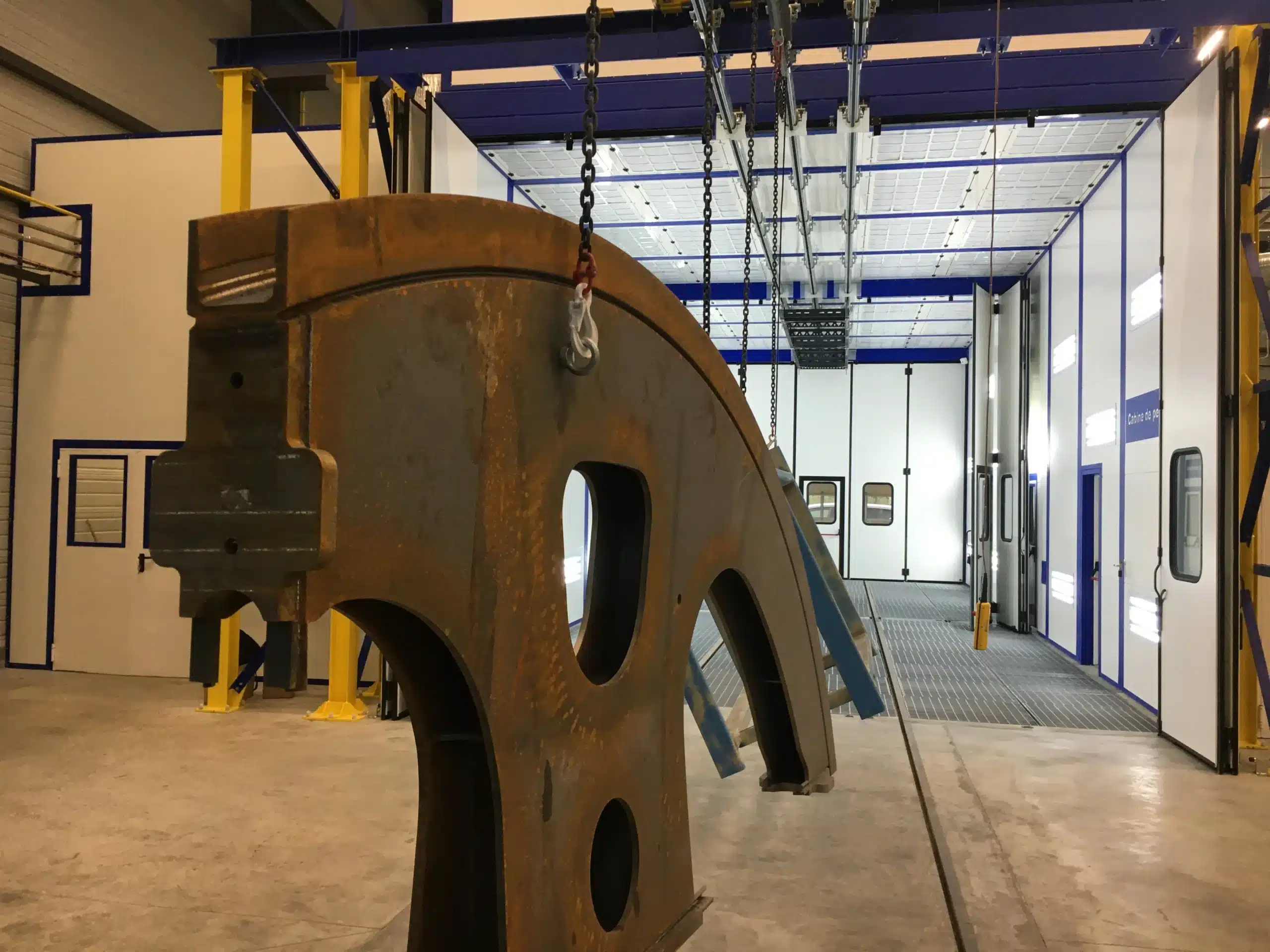
Pressurized Vertical-Flow Liquid Paint Booth
Finishing takes place in a controlled-atmosphere environment inside the pressurized paint booth. The vertical airflow system directs air from top to bottom, ensuring that overspray is immediately captured by the dry filtration systems located in the base. Pressurization prevents dust particles from entering from the outside, ensuring the highest level of aesthetic quality and uniform protection on every component, in full compliance with current regulations on workplace health and safety.
Overhead conveyor with automatic handling and lifting station
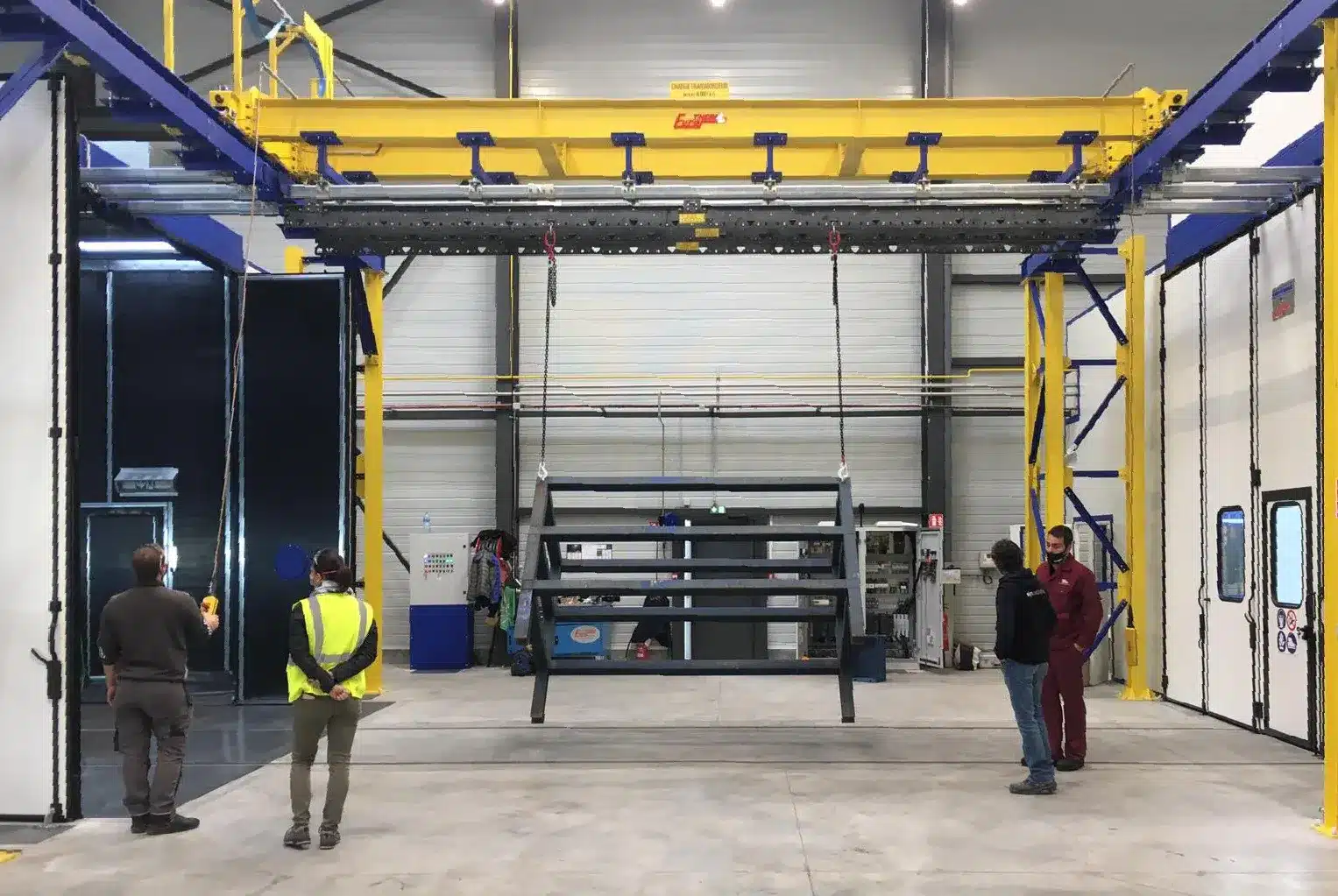
The logistical efficiency of the entire plant is ensured by an advanced overhead conveyor system equipped with an automatic cart handling system. This design allows for the smooth transfer of heavy parts between the various stations, reducing downtime. The presence of a dedicated lifting station also allows for precise adjustment of the working height, improving ergonomics during the painting phases and making it easy to reach every part of complex structural components.