


Learning center
2025Liquid coating: what it is, how it works, benefits and applications
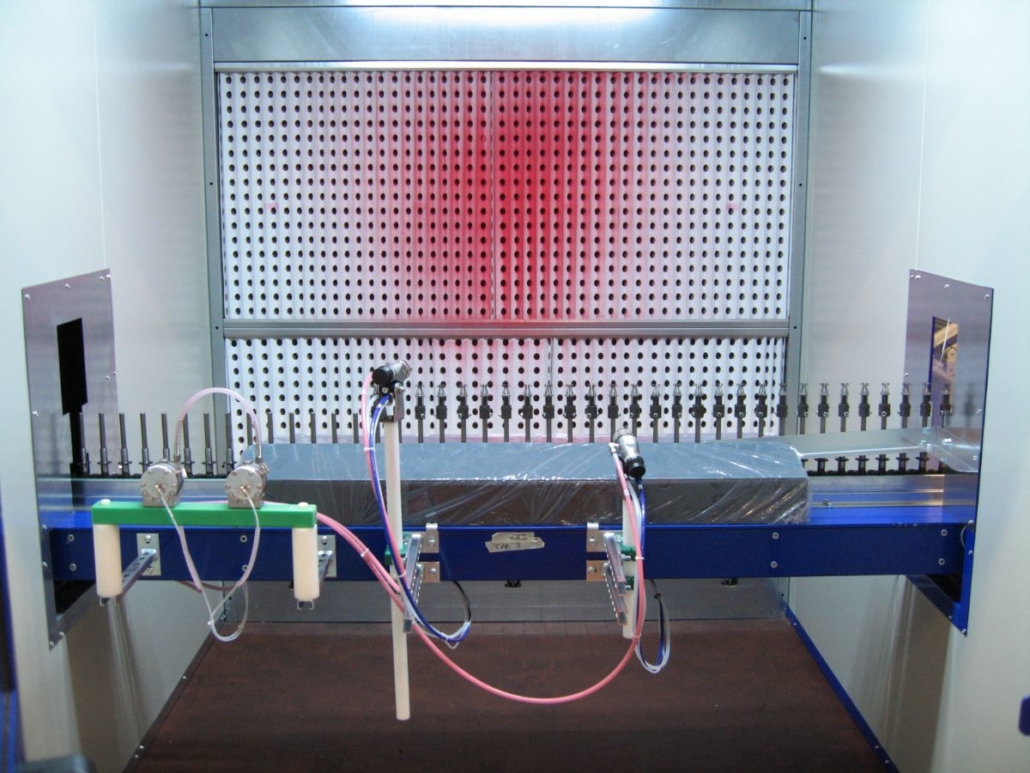
Liquid coating is an industrial finishing process that uses solvent-borne solvent-based or water-based paints applied pneumatically or electrostatically. It is the solution of choice for components that require high-quality aesthetic surfaces, color variety, uniform color rendition, and compatibility with heat-sensitive materials, and is often the only alternative that can meet particularly stringent aesthetic, performance, and regulatory requirements.
The basic steps of industrial liquid coating
A complete cycle of industrial liquid coating consists of three main steps: surface preparation or surface pretreatment, liquid paint application, and drying or film consolidation.
Depending on the painting requirements, there are different application technologies:
- Automatic, manual and pressurized liquid paint booths for small series or high-customization production.
- Automated robotic lines for large volumes with high repeatability and optimized cycle times.
- Integrated custom solutions for critical productions in regulated industries.
-
01
Surface preparation or surface pretreatment: consists of removing contaminants and conditioning the substrate by mechanical (brushing, controlled micro-sanding), physical (ionization, plasma), and chemical (phosphating, nano-ceramics, silanes) treatments. This step is crucial to ensure adhesion, gloss and durability of the coating.
-
02
Liquid paint application: is done by conventional spray guns, HVLP (High Volume Low Pressure), airless or electrostatic systems, operated manually or by robot. Transfer efficiency, film uniformity, color control, and overspray management and recovery are variables to consider at this stage.
-
03
Film drying or consolidation: takes place in controlled convection ovens or in IR or UV tunnels to accelerate the curing and adhesion of the coating on surfaces with complex geometries or on heat-sensitive substrates. The parameterization of variables such as oven temperature, flash-off time and speed of handling, i.e., the time the baked item remains in the oven, is decisive in achieving color stability, adhesion and mechanical strength.
Industrial liquid coating: optimal process management
As mentioned earlier, industrial liquid coating maintains an irreplaceable role in all those sectors where aesthetic expectations, performance requirements, energy efficiency and environmental sustainability are a strategic asset for business competitiveness. In the context of these productions, usually, the slightest deviation from expectations leads to the obligation to rethink the painting process.
To ensure products with certified quality regardless of the type of material and morphology of the parts, the factors to be taken into account when defining and evaluating the most suitable industrial painting equipment for one’s needs are:
Precise management of film thickness and uniformity
In liquid coating, film uniformity is one of the key indicators of process quality, describing the ability of the coating to maintain a consistent thickness and homogeneous distribution over the entire surface of the part. Achieving a uniform film means ensuring a stable coating and consistent protection over time, avoiding visual or functional defects.
Film uniformity depends on a combination of physical and control parameters: paint viscosity, spray pressure, application speed and distance, and flow direction or gun angle. A crucial role is also played by booth air flows, which must be balanced to contain overspray and maintain constant temperature and humidity inside the spray booth.
In state-of-the-art automatic systems, control of environmental conditions is handled by air handling units for aeraulic balancing of the system. On the other hand, the management of overspray, or excess paint, is handled by the wall or floor filtration systems in the spray booths. This makes it possible not only to reduce waste and optimize paint consumption, but also to ensure repeatability and excellence of the result, even in complex or variable batch production.
In the project carried out for SBB Swiss Federal Railways, the Eurotherm team designed and implemented a sectorized wall filtration system that significantly reduced energy consumption while still providing stable airflow.
Flexibility and speed in color and product switches
In liquid coating, the ability to switch quickly from one color to another or from one product to another is a strategic productivity factor. Color switching happens when the plant has to adapt to short batch cycles, in the case of frequent customizations or multi-brand production-an increasingly common scenario in high aesthetic and custom design industries, such as cosmetics, aerospace or industrial decoration.
The goal is to minimize downtime and material losses while ensuring color purity and total absence of contamination. To do this, state-of-the-art coating plants integrate solutions for conveying and handling parts, advanced overspray filtration systems, dosing and paint management systems integrated with the PLC, and centralized processes to define dwell times and transit of parts through the various processing areas. This ensures consistent results and enables agile response to variability in demand.
Eurotherm’s curated installation for Aereospace demonstrates the crucial importance of equipping oneself with advanced control technologies to ensure accurate coating processes, and thus reliable and safe functional coatings.
Automation and digital process tracking
In liquid coating, automated management of cycles-from part loading to handling along the various coating, flash-off and baking stations-makes it possible to maintain consistent process quality and minimize human intervention, with direct benefits in terms of efficiency, safety and repeatability.
Our automated plants integrate handling systems and coating robots capable of adapting to production needs. This is complemented by digital batch tracking to collect real-time data on temperature, viscosity, film thickness, material consumption and cycle times-information that feeds a digital ecosystem geared toward predictive maintenance and continuous improvement of line performance.
In Eurotherm’s curated installation for the pretreatment, painting and finishing of ACE components, overhead conveyors for automatic part handling and RFID tracking of production enable operation with consistent accuracy. Each batch is digitally monitored: application parameters and consumption are recorded, ensuring traceability and regulatory compliance.
Get in touch
Eurotherm is active in the design of liquid coating equipment, developing tailor-made solutions, calibrated to specific production needs and optimized for layout constraints, ergonomics and safety requirements.
Liquid coating in strategic industrial sectors: the role of innovation
In many industries, the quality of painted surfaces is a crucial requirement for regulatory compliance, its marketability, and thus its market positioning.
In pharmaceutical and cosmetic packaging, for example, the coating contributes directly to the safety and integrity of the content; in luxury brands, it affects product identity and value perception; for components destined for the Defense and Aerospace sectors, it is an essential element of reliability, strength, and performance continuity; and in the automotive sector, finally, control of the coating process is essential to ensure high and repeatable aesthetic standards.
In these same areas, industrial liquid coating processes are at the center of constant technological evolution, aimed at further extending their fields of application and meeting the structural challenges posed by the most complex productions. Plant automation, pressurized booths with advanced filtration systems, controlled drying solutions, innovative and environmentally friendly pretreatments are among the useful strategies for dealing with complex productions-variable batches, complex geometries, customization requirements-without sacrificing quality.
From the ultra-durable coating of composite parts for automotive, to surface finishes for cosmetic packaging designed to enhance packs and dispensers, to coatings intended for table art where aesthetic excellence blends with chemical resistance and durability-Eurotherm liquid coating equipment has proven time and again that it is up to the task of critical industry applications.
Sustainability of paint plants as a competitive advantage
Where innovation becomes crucial for industrial development, the discourse cannot ignore energy-efficient and energy-saving technologies. In the global scenario then, where ESG values are a business performance indicator, sustainability of industrial painting processes is no longer just a matter of regulatory compliance but a real driver of competitiveness.
Starting with the European Directive 1999/13/EC (VOC Directive) regulating emissions of VOCs, volatile organic compounds from solvents used in industrial processes, the entire liquid coating industry has accelerated its evolution toward cleaner and more efficient facilities, and digitally controlled processes.
The main guidelines on which the sustainability of the process is now being played out concern four key areas:
- Solvent and VOC management: controlling emissions and complying with industry environmental regulations requires planned choices on paints and solvents and efficient abatement systems. The focus is on reducing emissions to the atmosphere, through filtration and abatement systems, and adopting water-based or low-solvent paints.
- Safety and waste management: in industrial liquid coating, sludges, paint residues, spent solvents, saturated filters, wash water and contaminated packaging are among the main categories of waste resulting from the process. In addition to the implementation of zero waste policies for source reduction, booth overspray filtration systems and air emission treatment filter units are the most effective strategies for the purpose of containing the effects of industrial pollution.
- Application and drying process control: precise management of pretreatment, painting and drying parameters is the key to minimizing waste and optimizing paint and energy consumption. Computerized plant management via PLC allows constant and timely monitoring of the entire coating cycle to assess its performance and environmental impact.
- Energy efficiency: ovens and drying tunnels are among the most energy-intensive technologies in a coating line; optimizing drying and baking cycles is therefore critical for sustainability and marginality. New generation plants also adopt heat recovery systems from drying tunnels and ovens, integrated with other energy sources to reduce consumption.
A significant example is the complete painting line built by Eurotherm for the historic Alstom site in Savigliano (Cuneo, Italy). To support the railway workshops in a path of greater efficiency and eco-compatibility of the production cycle, the liquid painting plant was custom designed by integrating advanced solutions for the recovery of heat generated during baking and advanced air filtration systems, aimed at reducing the overall environmental impact of the process.
How to choose a liquid coating equipment: criteria and best practices
From what has emerged so far, choosing a liquid coating plant therefore means designing a production system that combines efficiency, quality and sustainability.
The variables to be evaluated when defining the configuration of the most suitable liquid coating plant for one’s needs concern not only the production capacity, but the entire process logic. The main criteria to consider are:
- Plant size and layout: must be consistent with the characteristics of the parts to be processed (materials and geometry) and with internal handling and transport flows.
- Automation and digitization: determinants for quality control, regulatory compliance and data-driven process management.
- Energy efficiency: state-of-the-art cabins and ovens integrate heat recovery ventilation systems, filtration and controlled VOC management, in line with European environmental standards.
- Sustainability: through overspray recovery systems and in-line implementation of energy-efficient technologies, production waste, operating costs and overall plant footprint can be reduced.
Get in touch
Eurotherm supports industries aiming to strengthen their competitiveness over the long term through an international team of consultants and engineers specializing in the design and implementation of custom plants and solutions for industrial painting.