


Learning center
2026Matt coating: the loss of gloss in industrial painting
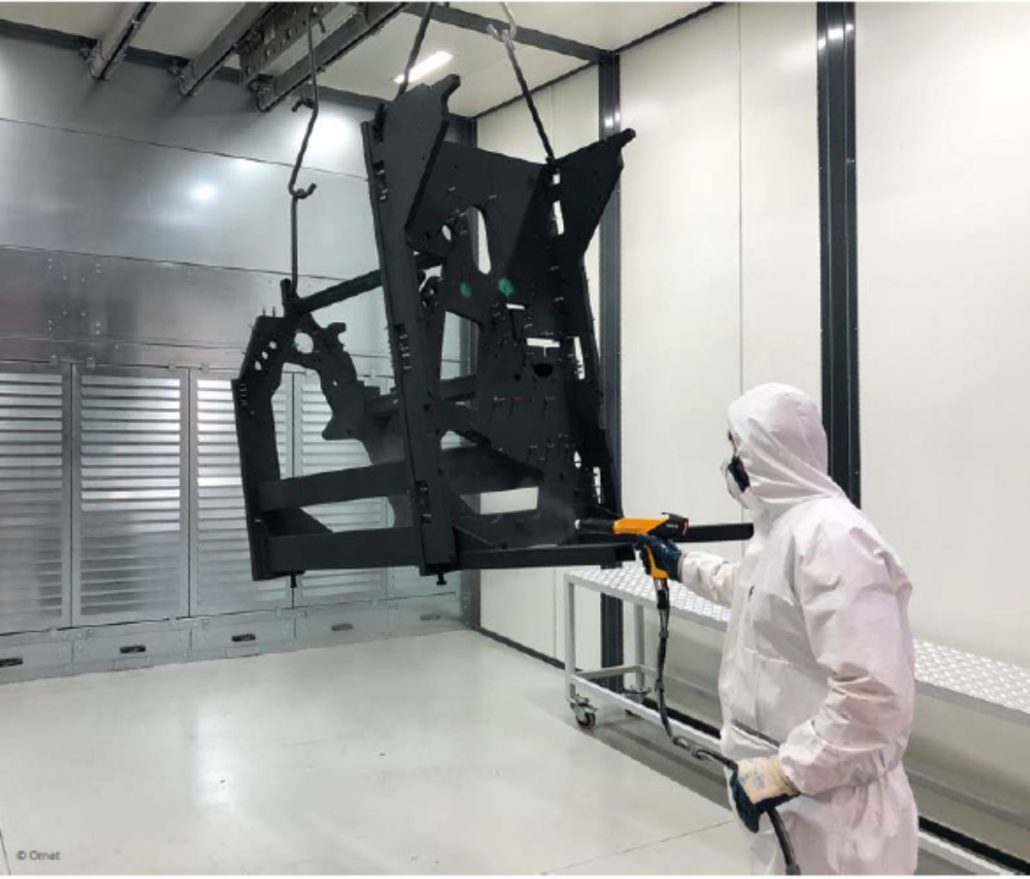
Impact of matte painting in industrial processes
Unwanted dulling in industrial painting is an aesthetic and functional anomaly that manifests itself as a loss of gloss or the appearance of diffuse halos on the treated surface.
This phenomenon is not only a visual problem but often indicates a non-durable paint that compromises the long-term protection of the metal substrate. In the high-quality industrial finishing industry, problems with paint durability are frequently attributable to incorrect management of the curing stage or an imbalance in the environmental conditions of the department.
The formation of an unintentional matte finish signals a deviation from optimal technical parameters throughout the production cycle. From proper chemical preparation of the part to millimeter control of temperature in the furnaces, each step must be calibrated to ensure stability. Addressing this critical issue requires a systemic analysis of the plant, aimed at neutralizing the variables that interfere with the proper formation of the protective film.
Causes of matte painting in industrial painting
Gloss loss is generally the result of an imbalance between multiple process variables that influence film formation.
Specifically, the main causes in industrial painting are attributable to suboptimal management of the temperature curve, application parameters inconsistent with the characteristics of the paint product, unstable environmental conditions, and the quality or state of preservation of the materials used.
When these factors are not properly controlled, the film fails to spread evenly before the consolidation stage, generating an irregular surface microstructure that scatters light instead of reflecting it specularly. This phenomenon leads to the formation of an undesirable matte finish and, in the most critical cases, a reduction in the protective performance of the coating.
Diagnosis of matte finish: how to identify the causes
Correct analysis of the opacity defect enables rapid tracing of the responsible process variable, reducing intervention time and production waste. Diffuse and uniform opacity is generally associated with thermal management problems or incomplete film cure.
In contrast, a localized opacity tends to indicate surface contamination or criticality in substrate pretreatment. When the surface appears dull and grainy, the cause can often be traced to poor film release due to incorrect atomization parameters or inadequate viscosity. Finally, variations in gloss between different production batches signal instabilities in oven parameters or environmental process conditions.
For this reason, diagnosis must be supported by continuous and structured monitoring of operational parameters so as to ensure repeatability, quality control and stability over time.
Gloss problems in powder coating: heating and curing
In powder coating, gloss is determined by the dynamics of melting the plastic granules inside curing ovens, where heat must promote continuous melting.
Major critical issues arise from inaccurate management of applied thicknesses, which generates local variations in light reflection on the surface of the part. Uneven heat distribution in thepowder coating plant ‘s baking tunnel prevents resins from reaching the ideal fluid state necessary for a glossy finish.
If the powder does not flow sufficiently before curing, it will create a dull, grainy surface texture. Using powders degraded by wet storage or excessive pneumatic recovery compromises the material’s ability to relax. Incorrect electrostatic charge parameters cause uneven deposition that results in diffuse opacity that is difficult to correct in post-production. Paint durability problems also emerge when the cross-linking temperature is not maintained for the required time making the paint not resistant to external agents. Too rapid cooling at the exit of the oven can, in addition, cause thermal shocks that alter the molecular structure of the coating and its final gloss.
Matt finish in liquid coating: evaporation and chemical interactions
In liquid paint systems, the degree of gloss depends on the ability of the resins to level out perfectly after spray application, before chemical consolidation begins.
If solvents evaporate unevenly, the surface takes on a micro-rugosity that scatters light unevenly, resulting in the matte effect.
The main causes include:
- The use of a mixture with viscosity unsuitable for the operating temperatures that prevents the coating from flowing out smoothly.
- The use of thinners with too fast evaporation times can cause the film to cool abruptly, resulting in moisture absorption and loss of gloss.
- Errors in adjusting compressed air pressure or the use of unmaintained nozzles generate coarse atomization that dulls the final result.
Excessive or turbulent ventilation inside the liquid paint booth also subtracts volatile components prematurely, blocking leveling. In addition, high ambient temperatures accelerate surface filming by trapping residues inside that dull the finish during drying. Finally, interaction between incompatible chemicals or moisture residues on the part can trigger reactions that degrade the original gloss of the product.
Get in touch
If you find gloss loss or nonconforming matte finishes, Eurotherm designs systems with precise control of temperature, airflow, and application parameters to ensure uniform paint spreading.
Process variables affecting the quality of matte finish
Gloss control requires constant monitoring of the interactions between dispensing technologies and drying systems installed in the production line. Key variables in preventing nonconforming matte finish include several technical aspects.
- Cabin airflow configuration to eliminate overspray without interfering with the natural drying rate of solvents.
- Use of high-efficiency heating systems that ensure absolute thermal stability within the curing ovens.
- Calibration of electrostatic parameters to ensure consistent paint transfer and avoid buildup that dulls workpiece edges.
- Implementation of advanced air barriers and filtration systems to keep the application environment free of volatile contaminants.
- Use of digital control systems for automated management of paint viscosity and flow rate.
How to optimize the process and prevent unintentional opacification
Avoiding a nonconforming matte finish requires coordinated control starting with surface pre-treatments and ending with final thermal stabilization. Only integrated production line management can eliminate inefficiencies and ensure lasting protection of treated surfaces.
Substrate preparation and pre-treatment techniques
Metal wettability is the essential starting point for the paint film to adhere and spread smoothly and evenly. If the surface has contamination, the paint encounters resistance to leveling, generating localized areas of shadow or opacity that compromise the finish.
Ensure effective chemical washing and degreasing cycles to remove any residual lubricating or protective machining oil. Ensure perfect drying of parts in the dedicated tunnel to prevent trapped moisture from causing gloss defects or detachment. Monitor the surface tension of the substrate through specific tests to promote the best possible interaction with the applied chemical coating.
Precise adjustment of spraying parameters
During paint dispensing, it is critical:
- Maintain strict operational discipline to ensure smooth and consistent deposition on every part geometry.
- Regularly monitor the viscosity of the product to adjust it to temperature changes detected in real time inside the booth.
- Calibrate the atomization pressure to achieve controlled particle sizes that promote specular relaxation of the resins.
- Avoid the application of out-of-specification thicknesses that could make the paint non-impact resistant or chemically unstable.
- Maintain a regular spacing and passing speed to prevent the formation of excessively dry or matted areas from the spray wind.
Temperature curve control and furnace management
The behavior of the polymers during heating is the factor that ultimately determines the final gloss and mechanical strength of the finish: the heat provided by the ovens must support the fluidity of the coating before the permanent structural consolidation process begins.
Observe the flash-off times required to allow gases and solvents to escape gradually before intensive heating. If the oven in use provides heat ramps, these should be developed to bring the material to the curing temperature following the technical specifications of the paint supplier. It is also important to use ovens that provide uniformity of heat over the entire internal volume to avoid differences in opacity between different batches, as well as to synchronize the line speed with the actual heating capabilities of the system to ensure complete and deep baking of the film.
Production environment management and monitoring
A working environment without controls introduces operational uncertainties that inevitably lead to problems in paint life and high production waste. For this reason, it is essential to adopt certified maintenance and control practices.
Additional indispensable precautions include: constantly monitoring temperature and relative humidity levels to keep the process within technically defined safety ranges; ensuring purity of air flows through systematic maintenance of filter packs and booth extraction systems; carrying out periodic cleaning of guns and feeding systems to prevent dry paint buildup from contaminating subsequent applications by degrading the gloss; and monitoring process parameters through instruments that allow complete traceability of each work cycle performed.
Get in touch
Eurotherm technicians analyze each process step to identify the causes of gloss loss and optimize plant operating conditions. Rely on solutions designed to ensure uniform, stable and defect-free finishes over time.