


Learning center
2025Industrial coatings: techniques, advantages and professional applications
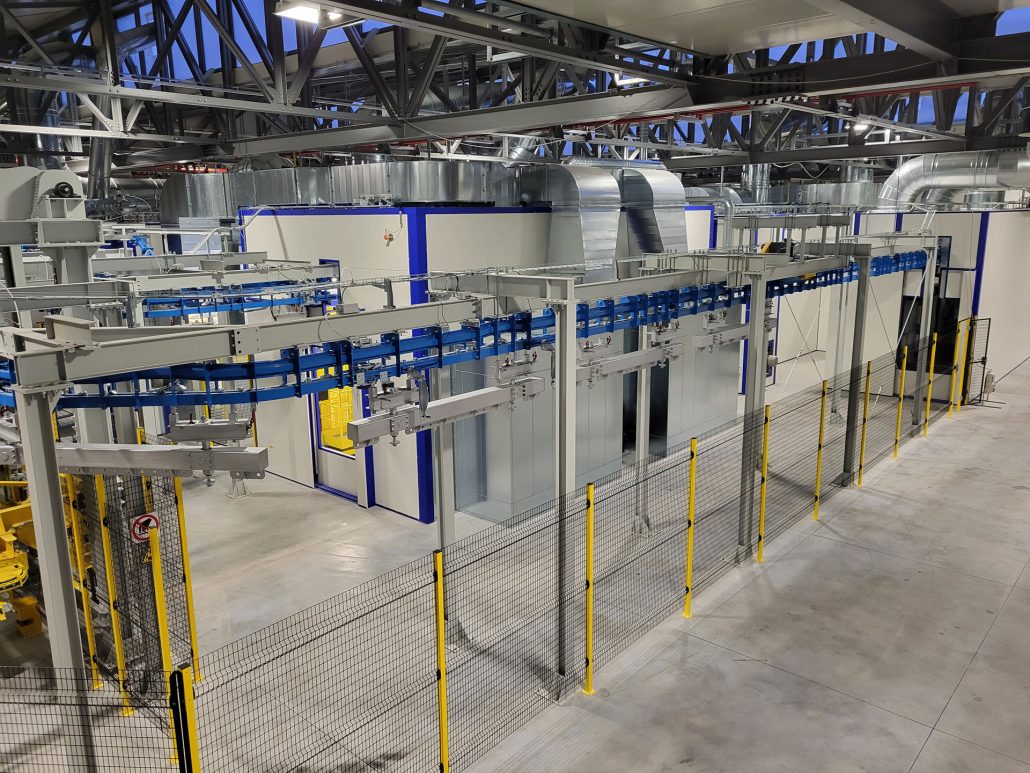
Design and technologies for high-performance industrial painting systems
Industrial coatings are technical-strategic processes that determine the strength, durability, aesthetic quality, and functional value of products destined for the most demanding industries, from automotive to aerospace, rail, and energy.
In this guide we delve into the technologies, processes, equipment and design criteria that make industrial coatings key elements of modern manufacturing. From the choice between powder and liquid coating, to pretreatment systems, regulatory requirements, and quality control parameters, we offer a comprehensive overview supported by real-world cases.
The industry context and technological evolution of the sector
At the intersection of functional needs and aesthetic expectations, industrial coatings are a key manufacturing process that can affect the strength of a component, the reliability of a means of transportation, the durability of a good, and the real and perceived quality of a wide variety of consumer products.
Today, sectors such as automotive, aerospace, rail, energy, and windows and doors require increasingly high-performance, durable and safe surfaces. From products intended for heavy-duty and wear applications that need to ensure long-term stability and mechanical strength, to cases where aesthetics determine the commercial value of the product, painting techniques become a strategic asset.
At the same time, the evolution of pretreatment and finishing technologies is redefining the standards of industrial painting: from automation to digitization of processes to environmentally friendly systems, the transformation is affecting the entire industry-from those who manufacture painting equipment and booths to those who use them for professional purposes.
This is demonstrated by the case of the liquid train painting plant built by Eurotherm and installed at the Alstom industrial site in Savigliano (CN), intended to enhance the company’s production with energy-efficient technologies capable of ensuring a sustainable, ergonomic and safe painting process. So is the flexible mixed-cycle painting plant, designed to improve the corrosion resistance of snowplow vehicles and to respond with agility to seasonal peaks in demand.
What’s more, advanced heat recovery systems that enable the conversion of heat loss characteristic of automatic, in-line industrial paint plants into energy-saving opportunities, as in the challenge issued to Eurotherm by a French company interested in reducing the consumption of its paint plant, which is constantly on.
In this changing and diverse scenario, investing in customized industrial coating equipment, the right pretreatment and finishing techniques, and the training of specialized personnel means not only improving the appearance and performance of products, but also gaining an important competitive advantage in terms of production efficiency, cost amortization, and strategic innovation.
Industrial coatings for automotive, rail, aerospace and energy
Where state-of-the-art technologies, process optimization and quality control converge, professional industrial coatings become a tangible added value for companies operating in the most competitive markets.
Automotive painting: aesthetic uniformity and mechanical strength
In the automotive sector, for example, professional painting ensures aesthetic uniformity and durability of vehicles, resistance to weathering, and resilience to mechanical stresses. The talk is not just about the bodywork but extends to functional components such as headlights-subjected to detensioning in high-precision ovens for maximum safety and driving comfort.
Industrial automotive coating plants must meet high standards of productivity, traceability and surface quality.
Coating for aerospace: performance and safety in extreme conditions
In the aerospace industry, advanced materials and extreme operating conditions require coatings that not only protect but also improve aerodynamic performance and resistance to extreme atmospheres.
Industrial painting for aerospace takes on strategic value because it contributes directly to passenger safety and aircraft efficiency. For this, liquid coating plants equipped with centralized processes and sophisticated control technologies are indispensable.
Industrial coatings for the railway industry: anti-corrosion and business continuity
The rail industry faces the challenge of long distances and continuous exposure to mechanical and climatic stresses. High-performance industrial coatings, including anti-corrosion treatments in line with relevant standards, ensure durable and uniform surfaces, reducing maintenance costs and improving service continuity. Railroad paint facilities must therefore combine robustness, ergonomics and energy sustainability.
Metal coatings for window frames and furniture: aesthetics and durability
In the world of door and window frames, metal furniture and architecture, aesthetic value is intertwined with durability requirements. Advanced coatings ensure durable surfaces and stable colors over time, protecting elements that must maintain a high visual and qualitative impact over the long term. Industrial coating for design and furniture is thus a decisive element in the perception of product value.
Industrial Coating for Energy and Oil&Gas: efficiency and infrastructure protection
Finally, for the Energy industry, particularly the Oil & Gas sector, painting is a concrete ally in business continuity. Specific treatments protect machinery and components from extreme conditions, prolonging their life. The adoption of tailor-made painting systems enables measurable benefits in terms of ROI and operational sustainability.
Industrial painting techniques: options, features and advantages
In industrial coatings, choosing the most suitable technology requires expertise and experience: each process depends on materials, intended use and required performance.
It is important to understand the difference between powder coating and liquid coating because each method has specific advantages in terms of aesthetics, durability, and sustainability. The paint application technique-as well as the definition of the pretreatment steps and the baking process-are the result of a technical evaluation that depends on several factors.
Ultimately, the choice between powder coating and liquid coating cannot be made without an accurate assessment of the production environment. Before defining the most efficient process, it is indeed necessary to consider a number of technical and operational variables that directly affect the quality of the final result and the sustainability of the entire cycle. Below are the main factors to be analyzed.
- 01
Materials: iron, aluminum, glass, plastic, wood, composites.
- 02
Production: seasonality, number and variability of batches, color changes.
- 03
Product: size, shape, complexity of geometries.
- 04
Intended use: outdoor, indoor, aggressive environments.
- 05
Expected performance: mechanical strength, corrosion protection, aesthetic performance, production efficiency.
Get in touch
Certified experience in industrial coatings.
With more than 30 years of experience in designing and building industrial coating systems, Eurotherm supports companies in the automotive, rail, aerospace, energy and design sectors with customized solutions and technologies that comply with current regulations.
When to prefer powder coating
Powder coating is distinguished by the electrostatic application of paint and the subsequent baking of parts in curing ovens capable of handling different temperature ranges. The technique is particularly popular in industries where mechanical strength and corrosion resistance of surfaces are essential, and has innumerable advantages in cases of high productivity. The absence of solvents found in liquid coatings, and the possibility of recovering and reusing excess sprayed powder, also reduce waste and environmental impact.
Eurotherm’s manual and/or automatic powder coating booths are equipped with advanced filtration systems-internally: roof, wall, floor; externally: filter units and cyclone separators-connected to tanks and hoppers, or color centers for automatic powder coating recovery and reuse.
When to prefer liquid coating
Liquid coating remains irreplaceable in contexts where the highest level of aesthetic finish and versatility in application are needed, to adapt to complex geometries and ensure homogeneous, glossy surfaces even under demanding production conditions. It is the technique of choice for painting bodies and car bodies-where composite materials and light alloys do not tolerate the thermal cycles required for powder coating polymerization-and in the Cosmetics&Pharma sector, where total process control is essential to protect formulations, preserve quality, and ensure compliance of cosmetic and medical preparations.
Eurotherm ‘s custom-built manual and/or automatic liquid paint booths can accommodate artifacts of various shapes and sizes and can be used with water- or solvent-based paints. Suction walls and air handling units for controlled temperature and humidity ensure quality finishes and lower booth contamination and atmospheric emissions.
Surface pretreatments in industrial coatings: adhesion, anticorrosion and defect reduction
In any industrial painting process, pretreatment is the step that determines final quality. Professional industrial coatings require perfectly clean and prepared surfaces in line with ISO 12944 and ISO 8501, which set standards for corrosion resistance and adhesion of coatings.
It is at this stage that parts are prepared to properly receive the coating, through the removal of contamination, oxides and impurities that could compromise the outcome of the coating.
Indeed, carefully executed pretreatment allows:
- Ensure perfect adhesion of the paint film;
- Preventing paint defects;
- Increase corrosion resistance;
- Extend the life of the coating;
- Reduce product obsolescence and possible maintenance costs;
Pretreatment generally takes place in several stages and may include:
- Chemical or solvent degreasing to remove oils and greases;
- Multiple washes and rinses, with mains water or osmotic water, to remove any residue;
- pickling, useful for removing surface oxides on steel and light alloys;
- chemical conversions such as phosphating, passivation, or nanotechnology treatments (zirconium, titanium, silanes), which improve adhesion and strength;
- sandblasting or shotblasting, to mechanically prepare the surface;
Alongside these established techniques, specific pretreatments such as aluminum anodizing, plasma treatments for polymeric and composite materials, or innovative laser cleaning solutions to ensure absolute precision and sustainability find application in some areas.
Raw material, functionality, and product performance are thus the variables that determine which pretreatments are best suited for the purpose. Production volumes, on the other hand, impact the sizing and configuration of the plant, and the choice of air conveyors for handling parts.
Eurotherm’s decades of experience in designing and building plants for multiple industries confirms the importance of a customized approach that can include and process all the variables that can impact the project. This is demonstrated by the solution devised to optimize pretreatment through environmentally friendly passivation of stainless steel for a furniture company, and the large painting plant for cosmetics built for a leading supplier in the metallization industry.
Quality control in industrial painting: regulatory compliance and product certifications
Quality control is a fundamental pillar for any industrial coating company that wants to ensure compliance and safety. Protocols include tests on thickness, adhesion and strength, performed in accordance with major international standards
The main monitoring systems verify parameters such as:
- Film thickness (complying with ISO 2360 and ISO 2808 standards);
- Adhesion (squareness test according to ISO 2409);
- Corrosion resistance (salt spray tests according to ISO 9227);
- impact and abrasion resistance (determination of impact resistance of coatings by weight drop according to ISO 6272);
These checks ensure regulatory compliance and are an integral part of the indispensable product certification process-synonymous with reliability, safety and competitive value in the marketplace. In addition to designing and manufacturing compliant and certified industrial coating machinery and equipment, Eurotherm is able to guarantee its customers the acquisition of efficient and fit-for-purpose technologies.
Get in touch
Rely on a partner with certified experience in industrial painting processes.
Eurotherm designs customized plants based on production requirements, materials, volumes and quality standards-we help you define the most efficient process for your needs.